
The Chronicles of a Novice Writer: On Steal Like An Artist by Austin Kleon
- Tebogo J. Khalo

- Apr 7, 2024
- 8 min read

Creativity is sometimes viewed as a mysterious force possessed only by a chosen few. But what if I told you that creativity isn't a mystical talent bestowed upon the selected few? This realization is precisely what Austin Kleon reveals in his thought-provoking book, "Steal Like an Artist." Kleon's remarks have a strong resonance with me as an artist exploring the complicated avenues of literature. His practical wisdom not only provides advice, but also inspires me to realize my creative potential as a novice writer, on the verge of publishing my first book.

In my first review, I've decided to focus on "Steal Like an Artist" since it relates directly to my experiences as an artist and as a novice writer. I'd like to investigate how Kleon's thoughts relate to my own approach to creativity and writing, studying the intricacies and identifying the pearls that speak to me the most deeply. Throughout this series of blog entries, I will immerse myself in Kleon's work, deconstructing each chapter to gain a better grasp of his ideas. It is critical for you, as the reader, to approach my findings with an open mind, so as to leave room for both care and critique.
For this first part, I've chosen to focus on the first three chapters of "Steal Like an Artist." These chapters set the groundwork for Kleon's philosophy, and I feel they have provided several viewpoints on kindling my creative sparks and comprehending my writing processes.
So join me on this adventure as we explore Kleon's discoveries and see how they relate to our own creative path. Let us unveil the mysteries of creativity and reveal the route to realizing our full artistic potential.

Personal Engagement of An Artist
"Steal Like an Artist" isn't your average self-help book. Kleon's writing style is refreshingly real and clear, making it accessible to readers from various backgrounds. Kleon pushes us to acknowledge influence, turn our surroundings into sources of inspiration, and, finally, nurture our distinctive voice as artists through 10 transforming principles. The book discusses theft as a kind of artistic expression, although not in the typical sense. Kleon emphasizes the concept that "nothing is original," and that all creative works are modifications, alterations, advancements, or creations inspired by something else. He explores several kinds of "stealing" and its implications in the context of creativity.
The book is based on the idea that creativity is a never-ending process of creation and reconstruction. Kleon demonstrates this notion with Pablo Picasso's remark, "Art is theft," which implies that all work derives inspiration from other sources. Kleon's attitude is personal and sympathetic. He recognizes that the counsel offered is frequently autobiographical, expressing the perspective that everyone who gives advice is relatively speaking to their young self. Kleon establishes a strong connection with his readers by pulling them closer to his writing and allowing them to reflect on their own creative journeys.

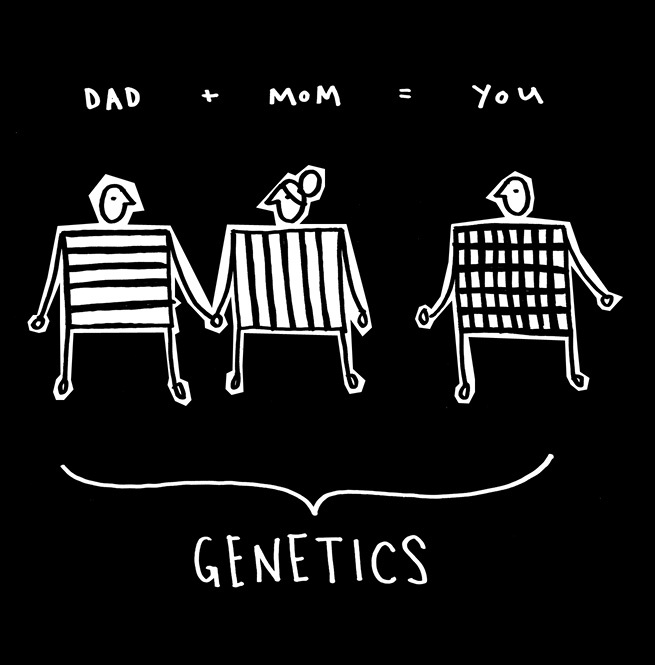
He offers a unique perspective on creativity that defies traditional beliefs. He deconstructs the idealized concept of the isolated genius, arguing that actual creation emerges from a mosaic of inspirations and interactions. As I think on my own artistic journey, I find Kleon's point of view very compelling. For too long, the notion of the lone creator has obscured the reality of artistic practice. Kleon's notion that creativity flourishes amid a broad tapestry of influences resonates with my own beliefs. I've realized that my art is a combination of the many voices, ideas, and experiences that have molded me.
When I look at my creative process, I notice the fingerprints of several inspirations across my work. From the brushstrokes of my favorite painters to the lyrical cadence of my favorite poets, writers, and authors, each influence has an impact on my artistic expression. Rather than eroding my creativity, these inspirations augment it, adding depth, subtlety, and resonance.
Kleon's focus on collaboration as a catalyst for creation hit home strongly with me. In my own artistic work, I've seen how collaboration can change things. Collaboration has helped me stretch the boundaries of my creativity, whether it's bouncing ideas off other artists, participating in joint initiatives, or getting input from trustworthy mentors. Through Kleon's viewpoint, I understand that creation is a collaborative enterprise, one that feeds on the interconnectivity of ideas, experiences, and voices.

Steal Ideas and their genealogies
Kleon's focus on the significance of "stealing" ideas is not to promote of plagiarism, but rather an invitation to take part in the rich tapestry of current innovations. Kleon correctly states that "every new idea is just a mashup or a remix of one or more previous ideas." This thought reflects German writer Goethe's observation that "we are shaped and fashioned by what we love." In essence, our hobbies and environment provide fertile ground for the development of new ideas.
Indeed, the process of idea generation is intrinsically linked. Each thought inspires the next, building on the groundwork built by its predecessors. As we interact with and investigate a certain subject or issue, we invariably discover unexpected insights and connections that stimulate more creativity.

Consider the analogy of a tree: each idea or concept is a branch that extends from the trunk of our interests and experiences. As we nourish and cultivate these ideas, they grow and thrive, eventually producing concrete creative output.
Seeing yourself as part of a creative lineage will help you feel less alone as you start making your own stuff.
Recognizing yourself as a member of a creative lineage is a transforming attitude that can help ease the sensation of loneliness that many people of us experience at the start of our creative journey. Kleon encourages recognizing the idea that every creative, artist, or writer is essentially standing on the shoulders of giants. When we see ourselves as inheritors of a rich tapestry of creation, we are relieved of the expectation of uniqueness and the need to carve our own path. Instead, we find comfort and inspiration in the fact that numerous others have gone on similar artistic journeys before us.
This sense of belonging to a larger creative community gives our individual creative pursuits a renewed sense of purpose and significance. Rather than working alone, we are supported by the collective wisdom, experiences, and accomplishments of those who came before us. Accepting our place in a creative lineage allows us to tap into the huge pool of information and inspiration that exists around us. We are no longer limited by our own creativity; instead, we have access to an infinite pool of ideas, methodologies, and viewpoints to draw from in our own work.

As we begin on our creative journeys, we can find comfort in knowing that we are not alone. We are part of a creative continuity that extends back through history and onward into the limitless possibilities of the future. By accepting our place in this lineage, we may find strength, inspiration, and solidarity while we pursue our own creative goals. The act of looking into and diving into a certain issue frequently produces unanticipated results. While the importance of certain information may not be immediately obvious, it always contributes to the larger mosaic of our creative attempts. Each morsel of knowledge, like a jigsaw piece, fits into the greater tapestry of our creative process, influencing and informing future initiatives.
In this approach, thoughts are not isolated, but rather interconnected nodes in a huge network of creativity. By accepting our connectivity and allowing ourselves to be inspired by the ideas and experiences of others, we open ourselves up to a world of limitless possibilities. This process of examination, synthesizing, and repetition allows ideas to expand, mature, and, eventually, form tomorrow's realities.

Personal Reflection On Steal Like An Artist
Reading "Steal Like an Artist" was a complete game changer for me. As someone who has struggled with self-doubt and creative blocks, reading into Kleon's words was like discovering a buried treasure of inspiration and wisdom. It was like a beacon of light, lighting the dark corridors of my artistic path.
You see, for a long time, I struggled with the idea that creativity was a mysterious talent only bestowed upon a select few—an elite club to which I didn't exactly belong. I was frequently immobilized by the dread of inadequacy, convinced that my ideas were unoriginal or undeserving. It was a stifling worldview that suffocated my creative energy and kept me stuck in a loop of dissatisfaction and self-doubt. But then "Steal Like an Artist" came into my hands, and everything changed. Kleon's beautiful words and practical insight helped me perceive creativity in a new perspective. I understood that creativity is not some mysterious power reserved for a select few, but rather a skill that can be developed and honed with focus and patience.

Kleon's focus on the need for practice and repetition was really motivating for me. It served as a reminder that creativity is a muscle that improves with practice. Armed with this new viewpoint, I embraced Kleon's practical exercises and set out on an adventure of exploration and self-discovery. With each page flipped and exercise performed, I felt myself increasingly releasing the bonds of self-doubt and coming into my own as a creative. Kleon's comments inspired and guided me in my quest to rekindle my love of art and writing. But, perhaps most crucially, "Steal Like an Artist" taught me to accept the messy, flawed nature of creativity. It served as a reminder that not every concept or idea is a masterpiece, and that failure is only a necessary step on the way to development and creativity. With this newfound resilience, I gained the courage to accept experimentation and take chances in my artistic interests.
In the end, "Steal Like an Artist" was more than simply a book; it was a lifeline that rekindled my artistic soul. It served as a reminder that creation is a journey, not a destination—one full of twists and turns, highs and lows, but, ultimately, limitless possibilities. And for that, I am forever thankful.

Reasons why recommendation this book!
After immersing myself in the transforming pages of "Steal Like an Artist," I'm sure that this book is essential reading for everyone looking to unleash their creative potential. If you've ever been choked by self-doubt or paralyzed by the dread of inadequacy, Kleon's words will act as a beacon of light, illuminating the route to rekindling your creative flame.
This book is especially helpful for emerging painters, authors, musicians, and other creators who are struggling to navigate the creative process. Kleon's practical guidance and personal tales provide essential insights into overcoming common challenges and expressing your distinctive voice to the world.
Furthermore, Kleon's book is a must-read for anybody interested in the intersection of creativity and innovation. Whether you're a seasoned expert or a novice enthusiast, Kleon's concept of accepting influence, restrictions, and your own creative instincts will strike a deep chord and motivate you to push the boundaries of your creative activities.
Closing Thoughts
As I wrap up this first look at "Steal Like an Artist," I'm filled with enthusiasm and eagerness for the journey that lies ahead. This series of blog entries is only the beginning—an invitation to dive further into the many subjects and concepts explored in Austin Kleon's transforming book. With every post, I hope to offer not just my personal views and observations, but also to provide a platform for thousands of like-minded people who, like me, are looking for inspiration and advice on their creative path. We'll begin on a collaborative journey of creativity, innovation, and personal growth, digging into the complexities of Kleon's teachings and discovering new insights along the way.
As I work on developing my skills and preparing to publish my first book, I view this series as more than simply a collection of blog posts—it's an opportunity to cultivate a lively community of novice enthusiasts ready to learn and develop together. Through shared experiences, mutual support, and collaborative discourse, we'll negotiate the ups and downs of the creative process and emerge stronger, wiser, and more inspired than ever.

So, to everyone who has joined me on this journey, I express my deepest appreciation and a warm welcome. Let us learn as we develop and continue to learn, making real connections and building a community that appreciates all types of creativity. Let's see where the journey takes us.


Comments